The Practice Gap
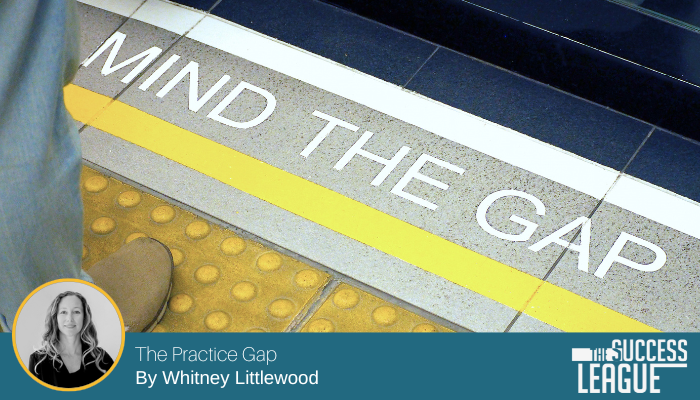
By Whitney Littlewood
Customer Success teams have more access to training, tools, and enablement resources than ever before. Over the past few years, many organizations have significantly increased investment in Customer Success Enablement, from onboarding programs and certifications to AI tools, playbooks, coaching, and dedicated enablement roles.
This investment is happening for a reason. As acquiring new customers becomes more expensive, companies are looking to their existing customer base for retention and expansion opportunities. For many SaaS organizations, a growing share of revenue growth now comes from existing customers through renewals, upsells, cross-sells, and expanded product adoption. In fact, according to ChurnZero, some of the highest-performing SaaS companies generate more than 60% of their new recurring revenue from expansion within their existing customer base.
At the same time, executive teams are being asked to do more with existing resources, driving increased investment in automation, AI, and enablement programs that help Sales and Customer Success teams operate more strategically and consistently.
Post sales teams are increasingly expected to impact retention, expansion, customer outcomes, and long-term revenue growth. As a result, many organizations are investing heavily in enablement to help CSMs develop stronger business acumen, executive communication, commercial skills, and strategic thinking.
The challenge is that increased investment doesn't automatically translate into improved performance.
Most enablement leaders have experienced the same frustrating pattern. A new program launches, participation is high, learner feedback is positive, and completion rates look strong. On paper, everything appears successful. Yet a few months later, the business problem that inspired the initiative remains largely unchanged. Renewal rates haven't improved. Expansion opportunities aren't increasing. Strategic customer conversations still feel inconsistent.
This isn't simply an issue within Customer Success. Learning and Development leaders across industries are grappling with the same challenge. According to Brandon Hall Group research, only 42% of organizations report strong alignment between learning initiatives and business objectives. In other words, more than half of learning investments struggle to demonstrate a clear connection to business outcomes.
At the same time, executive expectations are rising. LinkedIn's 2025 Workplace Learning Report found that 49% of learning leaders are facing increased pressure to demonstrate measurable business impact from their programs. Training completion, engagement scores, and learner satisfaction are no longer enough. Leaders want evidence that enablement investments are influencing the behaviors that drive retention, expansion, and growth.
Customer Success faces an additional challenge because many of the outcomes we care about most are lagging indicators. By the time NRR, GRR, churn, or expansion rates move, the behaviors influencing those metrics have often been developing for months. This makes it tempting to focus on participation metrics because they are easier to measure. However, activity is not the same as capability. Effective enablement is ultimately about helping people think differently, make better decisions, and approach customer situations with greater confidence and judgment.
Helping people understand concepts, frameworks, and best practices is an important foundation, but understanding a concept and applying it effectively are two very different things. The most valuable skills in modern Customer Success involve interpreting complex situations, connecting product capabilities to business outcomes, asking better questions, navigating competing stakeholder priorities, and making sound decisions in ambiguous environments. These capabilities cannot be developed through content consumption alone. They require opportunities to apply new ways of thinking in realistic scenarios, receive feedback, refine an approach, and try again.
Another challenge is that many enablement programs end just as skill development should begin. Frameworks are introduced, resources are shared, but before anything has been put into practice, the team has moved on to the next initiative. Managers are too busy to do ongoing coaching. But, learning a skill is very different from mastering one. Runners improve by tracking pace over time. Athletes review their games. Musicians rehearse. Improvement comes from deliberate practice, feedback, and incremental progress. Customer Success should be no different.
Practice also naturally leads to measurement. If the goal is to get better, we need ways to understand whether improvement is actually happening. Long before retention or expansion rates change, leaders should be able to see evidence that new skills are taking hold. CSMs may be engaging more executive stakeholders, reducing customer escalations, leading more strategic conversations, improving renewal forecast accuracy, identifying expansion opportunities earlier, or receiving stronger manager assessments. These signals provide valuable evidence that behavior is changing and that enablement investments are moving in the right direction.
The most effective enablement programs recognize that performance improvement follows a progression. Knowledge leads to understanding and understanding becomes skill through practice. Skill drives behavior change. Behavior change influences customer outcomes. Customer outcomes ultimately drive retention and growth.
As AI continues to make knowledge more accessible, information is becoming a commodity. The greatest opportunity for performance improvement now lies in the skills that are hardest to automate: strategic thinking, business acumen, executive influence, sound judgment, and the ability to build trust. Those skills are not learned through exposure. They are built through practice. After all, knowing what to do is only the beginning. The real value comes from being able to do it consistently when it matters most.
Your CSMs shouldn’t be practicing on customers. That's why we created CSM Edge, a personalized coaching program that combines AI-powered asynchronous video with expert human feedback to help Customer Success professionals strengthen the capabilities that drive career growth and business impact. Through realistic customer scenarios, targeted coaching, and measurable skill development, participants build the confidence and judgment to perform when the stakes are highest.
Learn more at CSM Edge for individuals or teams or visit TheSuccessLeague.io/coaching. Want more details? Contact Whitney@thesuccessleague.io.

Whitney Littlewood - Whitney is a passionate customer success leader that believes a healthy mix of data and empathy drive exceptional customer outcomes. She most recently led customer success teams at high-growth startups including UserTesting and Optimizely. Before that, she held roles in consulting, product development and marketing at companies including Adobe and Travelocity. She loves teaching and helping people grow both professionally and personally.